Why Am I Breaking Out on My Chin and Jawline?
By the DermaVault Editorial Team ·
Breakouts on the chin and jawline in adult women are most often linked to hormones. Androgens (hormones that rise and fall with your cycle, stress and life stages) push the oil glands to make more oil, and the lower face is where this tends to show. Products, stress and diet can add to it, and a consistent routine usually needs 6 to 8 weeks before you can judge it.
Breakouts that keep returning to your chin and jawline are most often linked to hormones. Androgens, a group of hormones every woman has, tell the oil glands in your skin to produce more oil. When that oil mixes with dead skin cells and blocks a hair follicle, a spot forms.
The lower face is the classic place for this to show in adult women. It is also a pattern that often improves with patient, fairly simple care, so most of this article is about what to do and how long to give it.
What causes breakouts on the chin and jawline?
Acne starts the same way wherever it appears. The NHS describes it as hair follicles becoming blocked with excess oil and dead skin cells. What changes with age is where the spots tend to sit and what sets them off.
In adult women, the classic description in the dermatology literature is of spots mainly on the lower part of the face: the jaw, the area around the mouth and the chin. The American Academy of Dermatology (AAD) says women with acne along the jawline and lower face tend to do well on hormonal treatment, which is a strong hint about what is driving it.
The hormones involved are androgens such as testosterone. A clinical review of adult female acne explains that they stimulate the oil glands to grow and to produce more sebum, the skin's natural oil. Your levels do not need to be abnormal for this to happen. The AAD lists ordinary fluctuations, such as those around a period, among the causes of adult breakouts.
One honest caveat. The "hormonal acne lives on the chin" rule is looser than social media suggests. The same review cites a study in which 89.8% of women had spots in several areas of the face, including the forehead and cheeks. Harvard Health makes the same point: the jawline and chin are typical, but adult acne can appear anywhere on the face or trunk.
So a face map can't tell you the cause on its own. The pattern over time tells you more.
Why do they flare before your period?
Hormone levels move through the month, and skin follows. The review above reports that acne worsens in the premenstrual period in 60 to 70% of women who have it.
The AAD lists the other moments when levels shift: pregnancy, perimenopause and menopause, and after starting or stopping the contraceptive pill. If your chin started breaking out within a few months of one of these, the timing is probably meaningful.

Stress belongs in this section too. The AAD explains that in response to stress the body produces more androgens, which stimulate the oil glands. That is why a hard month at work can show up along your jaw even when nothing in your routine has changed.
What else can make chin breakouts worse?
Hormones are the usual base layer. Several other things can pile on top, and these are the ones you can change.
| Possible contributor | What the sources say | A clue it applies to you |
|---|---|---|
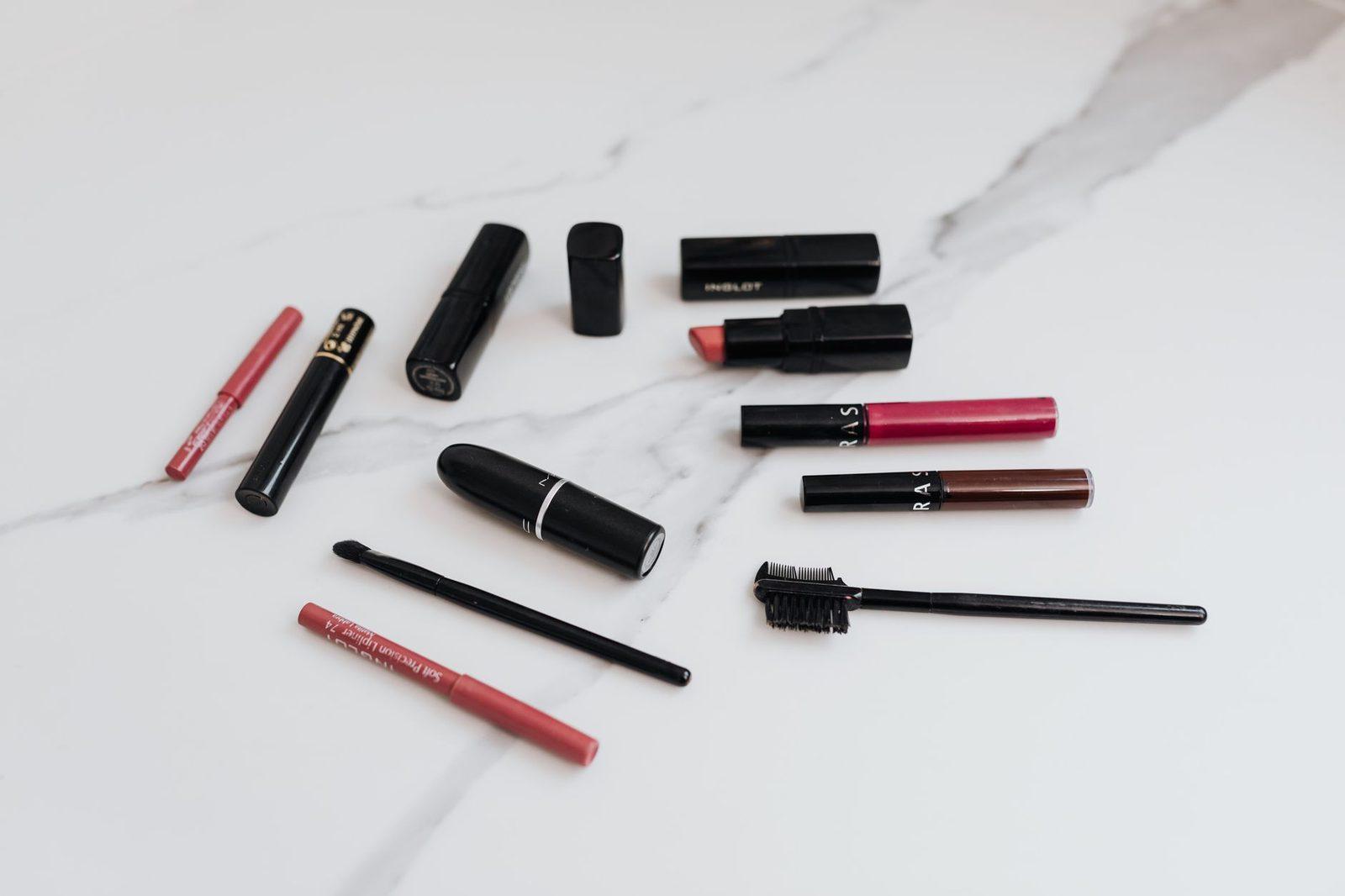
| Skin, hair and lip products | Products that aren't labelled non-comedogenic (formulated not to clog pores) or oil-free can cause breakouts. Lipstick or lip balm can cause tiny breakouts around the lips. | Lots of small, similar bumps that began after a new product. This can take from a few days to 6 months to appear. |
| Touching and picking | Squeezing pushes some of the contents deeper into the skin and raises the risk of scarring. | Spots that linger for weeks or leave marks. |
| Diet | Dairy and high-glycaemic foods (those that raise blood sugar quickly) are linked to acne. | Hard to judge by eye. The link is an association, and it does not mean a food is your cause. |
| Smoking | Associated with non-inflamed, clogged-pore acne in adult women. | Mostly blackheads and closed bumps with little redness. |
| Medicines and health conditions | Acne can be a side effect of some medicines, and is sometimes a sign of an underlying condition. | Breakouts that began with a new medicine, or that come with irregular or absent periods. |
On that last row: irregular periods together with persistent acne can be a sign of polycystic ovary syndrome (PCOS). Only a doctor can confirm that, usually with blood tests and a scan.
How can you tell what is driving yours?
You can't see hormones, so the practical method is to record what you can see and look for a rhythm.
For two or three cycles, note the day your period starts and the days new spots appear on your lower face. Add anything that changed that month, such as a new foundation, a stressful stretch or a new medicine.
A flare that arrives in the week before your period, month after month, points towards hormones. Small bumps that turned up after a product change and never fully clear point towards the product. Often it is both.
Photos help more than memory here. A cosmetic skincare app such as DermaVault maps blemishes by face zone and tracks the change between scans, which gives you an estimate to compare against your cycle notes. It can't tell you the cause, but it can show you whether the chin really is the main area and whether a change you made is working.
What should you do first, and in what order?
Change one thing at a time, and give each change long enough to judge. The AAD's advice is to use one acne product for 6 to 8 weeks before deciding. Fewer breakouts usually show at 4 to 8 weeks, and clearing takes around 16 weeks.
- Strip the routine back. Wash your face twice a day with a gentle cleanser, then moisturise. If you are starting from scratch, this simple routine for beginners is enough.
- Check what touches your lower face. Look for "non-comedogenic", "oil-free" or "won't clog pores" on makeup, sunscreen, moisturiser and hair products. Swap any lip product you suspect.
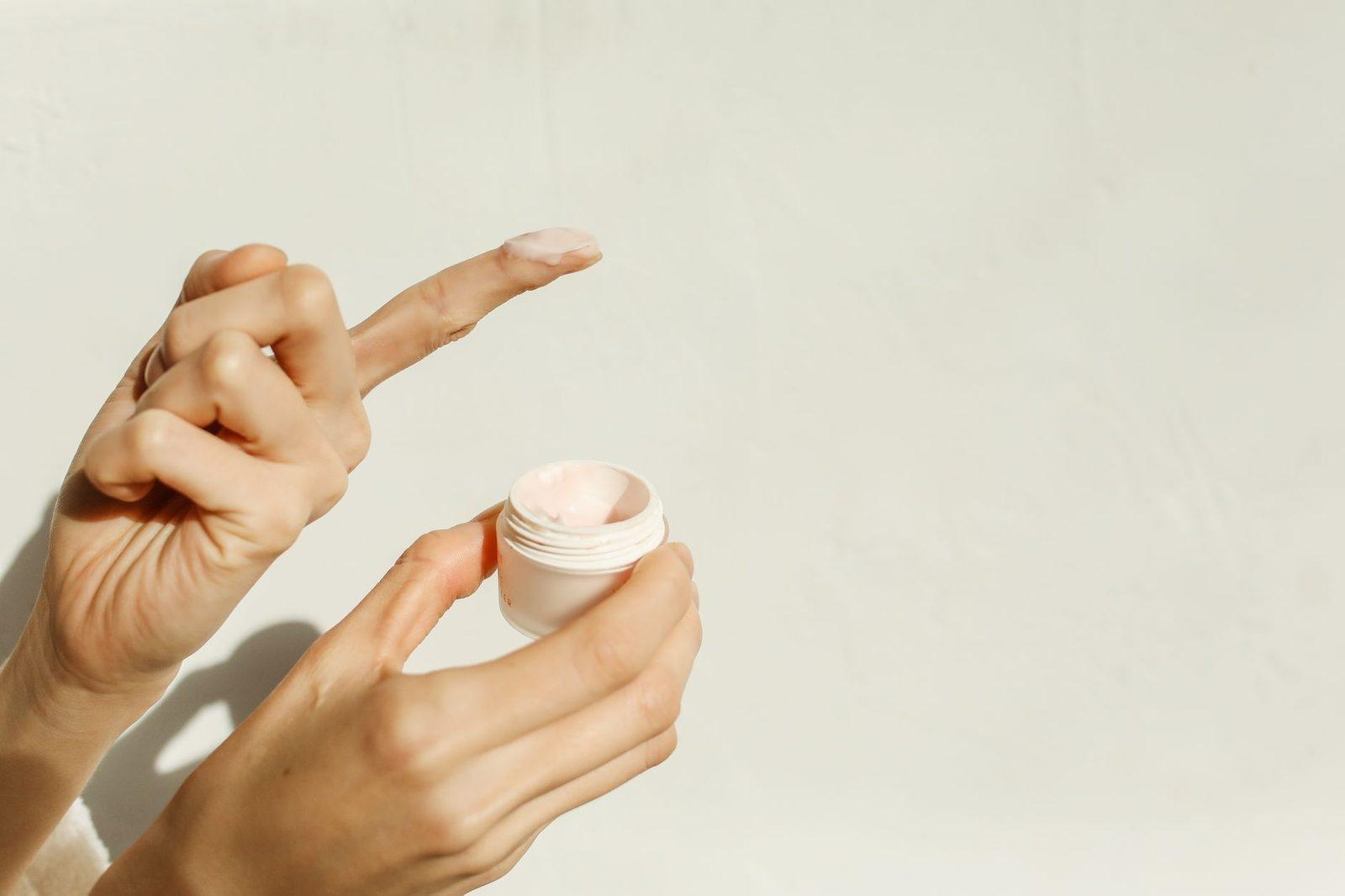
- Add one active ingredient. The AAD recommends four for adult acne. Adapalene is a retinoid (a vitamin A derivative) that helps clear blackheads, whiteheads and pimples. Benzoyl peroxide works well on mild pimples, and starting at 2.5% limits irritation. Salicylic acid unclogs pores and suits blackheads and whiteheads best. Azelaic acid helps with acne and can fade the dark marks spots leave behind.
- Apply it to the whole area. Spread a thin layer over the chin and jawline every time. Dabbing it only on visible spots does nothing for the ones forming underneath.
- Patch-test and protect. Try any new active on a small test spot twice a day for seven to ten days first. Wear sunscreen every morning. Harvard Health recommends a broad-spectrum, tinted sunscreen daily to stop post-spot marks getting darker.
- Wait, then review at 6 to 8 weeks. If there is some improvement, keep going. If there is none, change the active or see a doctor.
If you choose adapalene, expect dryness early on, and read how to start retinol without irritation first, because the same slow approach applies. A brief worsening at the start is common enough to have its own name, covered in skin purging vs breaking out.
If you are pregnant or trying to conceive, retinoids including adapalene are not recommended, and the AAD advises seeing a dermatologist before using acne treatments at all. The British Cosmetic Dermatology Group says retinoids should not be used while breastfeeding either. Check with your doctor before using salicylic acid as well.
For marks left behind once spots heal, see how to fade dark spots.
What doesn't help?
Scrubbing is the most common mistake. Both the NHS and the AAD warn that scrubbing irritates the skin and can make acne flare.
Washing more often does not help either. Twice a day is the recommendation, and drying the skin out works against you. The AAD puts it bluntly: dry skin is irritated skin, and irritated skin is more likely to break out.
Switching products every week or two feels productive and isn't. No acne treatment shows what it can do in that time, so you end up with irritation and no information.
Squeezing deep spots on the jawline is the habit most likely to leave a mark. Those spots sit well below the surface, so pressure tends to push the contents further in.
Cutting out whole food groups on a hunch is also hard to justify. The diet link is real enough to appear in dermatology reviews, but the sources describe an association with dairy and high-glycaemic foods. They do not show that removing them clears skin.
When to see a dermatologist
Book an appointment if any of these apply:
- You have large, painful spots that sit deep in the skin, or spots that leave scars. Early treatment means fewer permanent marks.
- You have used a non-prescription treatment properly for 6 to 8 weeks and seen no change.
- Your breakouts come with irregular or absent periods, or started alongside a new medicine.
- Spots are leaving dark marks that don't fade.
- You are pregnant or planning to be and want to know what is safe to use.
- Your skin is affecting your mood or confidence. The NHS lists this as a reason to see a GP in its own right.
A doctor has options you can't buy. For women with deep, tender spots on the lower face, jawline or neck, the AAD describes two hormonal treatments a dermatologist may consider: certain contraceptive pills, which take 2 to 3 months to show improvement on average, and a tablet called spironolactone. Whether either is suitable depends on your health history, which is a conversation for the appointment.
Common questions
Does chin acne always mean a hormone imbalance?+
No. Ordinary hormone changes around a period, pregnancy or menopause can be enough to set off breakouts. A doctor can check your hormones if you also have irregular or absent periods.
Can my lip balm or toothpaste cause spots around my mouth?+
Lip balm and lipstick can. The American Academy of Dermatology notes that tiny breakouts around the lips may come from lip products. The sources used here don't cover toothpaste, so that link is unconfirmed.
How long does a hormonal breakout take to calm down with treatment?+
With a non-prescription active used consistently, expect fewer breakouts in 4 to 8 weeks and clearer skin at around 16 weeks. If a doctor prescribes the contraceptive pill for acne, improvement is typically noticed in 2 to 3 months.
Will chin breakouts stop after my 20s?+
Not necessarily. Some adults keep getting acne into their 30s, 40s and 50s, and it can appear for the first time in adulthood, including around menopause.
Sources
- Adult acne
- Stubborn acne? Hormonal therapy may help
- Adult acne treatment dermatologists recommend
- I have acne! Is it okay to wear makeup?
- Acne - NHS
- Retinoid or retinol?
- Adult female acne: Why it happens and the emotional toll
- Adult female acne: a guide to clinical practice
- 10 skin care habits that can worsen acne
- How to test skin care products
- Topical Retinoids - British Cosmetic Dermatology Group
This guide is general information about skincare, not medical advice, and it cannot diagnose a skin condition. See a dermatologist or your doctor about anything that worries you.