Skin Purging vs Breaking Out: How to Tell
By the DermaVault Editorial Team ·
Purging is a short-lived flare of spots after you start an ingredient that speeds up skin cell turnover, such as a retinoid or an exfoliating acid. It should ease within a few weeks. Spots that come with stinging, itching or a rash, that follow a product with no such ingredient, or that are still getting worse after 6 to 8 weeks are better treated as a reaction or a poor fit.
Purging is a short flare of spots that can follow a new product containing an ingredient that speeds up skin cell turnover. Retinoids and exfoliating acids are the usual ones. It should settle within a few weeks as your skin adjusts.
A breakout caused by a product that doesn't suit you behaves differently. It keeps going for as long as you use the product, or it arrives with stinging, itching or a rash. The rest of this article is about telling the two apart early enough to act.
What is skin purging?
"Purging" is a skincare term more than a medical one. Cleveland Clinic describes it as a sign that your skin is going through rapid turnover: it can look like an acne breakout, it can last a few weeks, and it is temporary.
The idea rests on how these ingredients work. Retinoids (vitamin A derivatives such as retinol, adapalene and tretinoin) change the way skin cells shed inside the pore. A dermatology review explains that they clear the microcomedone, which is the tiny early blockage that every spot grows from, long before you can see it.
The usual explanation for purging is that blockages already forming under the surface come up sooner than they would have. You see several weeks of future spots in a shorter window.
Exfoliating acids are the other group. Alpha hydroxy acids (AHAs) such as glycolic and lactic acid loosen the bonds holding dead cells on the surface. Beta hydroxy acids (BHAs), mainly salicylic acid, are oil-soluble and work deeper inside the pore.
Is purging real, or just a polite word for a breakout?
The evidence is thinner than the confidence with which purging is discussed.
On one side, the patient information for adapalene published by MedlinePlus (the US National Library of Medicine) states plainly that acne may get worse during the first few weeks of treatment, and that the full benefit can take 8 to 12 weeks or longer.
On the other, a 2009 review in the Journal of Drugs in Dermatology went looking for clinical trial data showing that topical retinoids make acne flare and found none. The trial data showed acne improving even in the first weeks. The authors suggested that when someone's skin does worsen in the first week or two, it probably reflects the natural ups and downs of their acne.
Both can be true for you as an individual. Acne fluctuates anyway, new products are often started during a bad patch, and retinoids also irritate the skin at first, which muddies the picture.
The practical conclusion is a cautious one. A few rough weeks on a retinoid or acid is common and usually not a reason to stop. "It's just purging" should never be the reason you push through skin that is sore, itchy or steadily worse.
How can you tell a purge from a bad reaction?
There are four things that can be happening, and they look different if you know what to check.
| Purge | Irritation | Clogged pores from the product | Allergy | |
|---|---|---|---|---|
| Which products | Retinoids, AHAs, BHAs | The same actives, used too much or too often | Makeup, sunscreen, creams, hair products | Any product. Fragrance is a common culprit |
| When it starts | First few weeks | Peaks in the first 1 to 2 weeks on a retinoid | A few days to 6 months after starting | Usually 24 to 72 hours after contact |
| What you see | What looks like an ordinary acne breakout | Redness, scaling, dryness, with or without spots | Many tiny bumps on the cheeks, chin or forehead, often slightly raised whiteheads | An itchy, eczema-like rash that may swell, blister or weep |
| How it feels | No marked stinging or itching | Burning or stinging | Usually nothing | Itchy |
| What to do | Continue, gently | Cut back and moisturise | Stop that product | Stop and see a doctor |
A few notes on that table.
Start with the ingredient list. If the new product contains no retinoid and no exfoliating acid, the turnover explanation doesn't apply. The American Academy of Dermatology (AAD) describes acne cosmetica, breakouts from makeup and similar products, as many tiny bumps that can take anywhere from a few days to 6 months to appear. That long delay is why the cause is so often missed.
Next, notice how your skin feels. Cleveland Clinic's guidance is to stick with a product through purging as long as it isn't causing a lot of stinging, itching or redness. Those three are the signal to reassess.
You will often read that a purge stays in the places you normally break out, and that spots in a new area mean a reaction. That follows logically from the theory, but none of the sources behind this article tested it, so treat it as a rule of thumb.
Irritation deserves its own mention because it causes spots too. The AAD is direct about this: dry skin is irritated skin, and any time you irritate your skin you risk more acne. A "purge" that comes with tight, flaking, stinging skin may simply be too much product too soon. If that describes your skin, how to repair a damaged skin barrier is the place to start.
How long does purging last?
Cleveland Clinic says a few weeks. Patient information for adapalene says the first few weeks. Retinoid irritation typically peaks within the first 1 to 2 weeks and then subsides, and redness, scaling, dryness and stinging are most likely in the first 2 to 4 weeks.
None of these sources gives an exact cut-off for purging, so here is a workable one borrowed from acne care generally. The AAD advises giving a treatment 6 to 8 weeks before judging it, with full clearing taking 3 to 4 months.
So expect the worst in the first month. By weeks 6 to 8 you should see the trend turning, with fewer new spots than at the start. If your skin is still getting worse at that point, stop calling it a purge.
Tracking makes that judgement easier. A photo in the same light each week is enough. If you use a cosmetic skincare app such as DermaVault, its progress tracking compares estimated clarity and blemish findings between scans, which is more reliable than trying to remember how your chin looked three weeks ago.
What should you do while your skin is purging?
The aim is to keep using the ingredient while giving your skin as little else to cope with as possible.
- Slow down before you stop. For a retinoid, apply it every other night for the first 2 to 4 weeks and build up from there. The AAD also suggests starting with the lowest strength you can find. For glycolic acid, once or twice a week at night is a sensible start.
- Use a pea-sized amount. That is the dose dermatology guidance gives for a retinoid, and using more only adds irritation.
- Moisturise every time. A gentle, non-comedogenic moisturiser makes a real difference to how well skin tolerates a retinoid, according to the dermatology review cited above.
- Add nothing else new. Cleveland Clinic recommends starting one product at a time so you can identify what is causing a problem. Two new actives at once makes this whole question unanswerable.
- Wear sunscreen daily. Retinoids and acids both make skin more sensitive to the sun. Use SPF 30 or higher every morning. There is more on that in do you really need sunscreen every day.
- Leave the spots alone. Squeezing pushes some of the contents deeper and raises the risk of scarring.
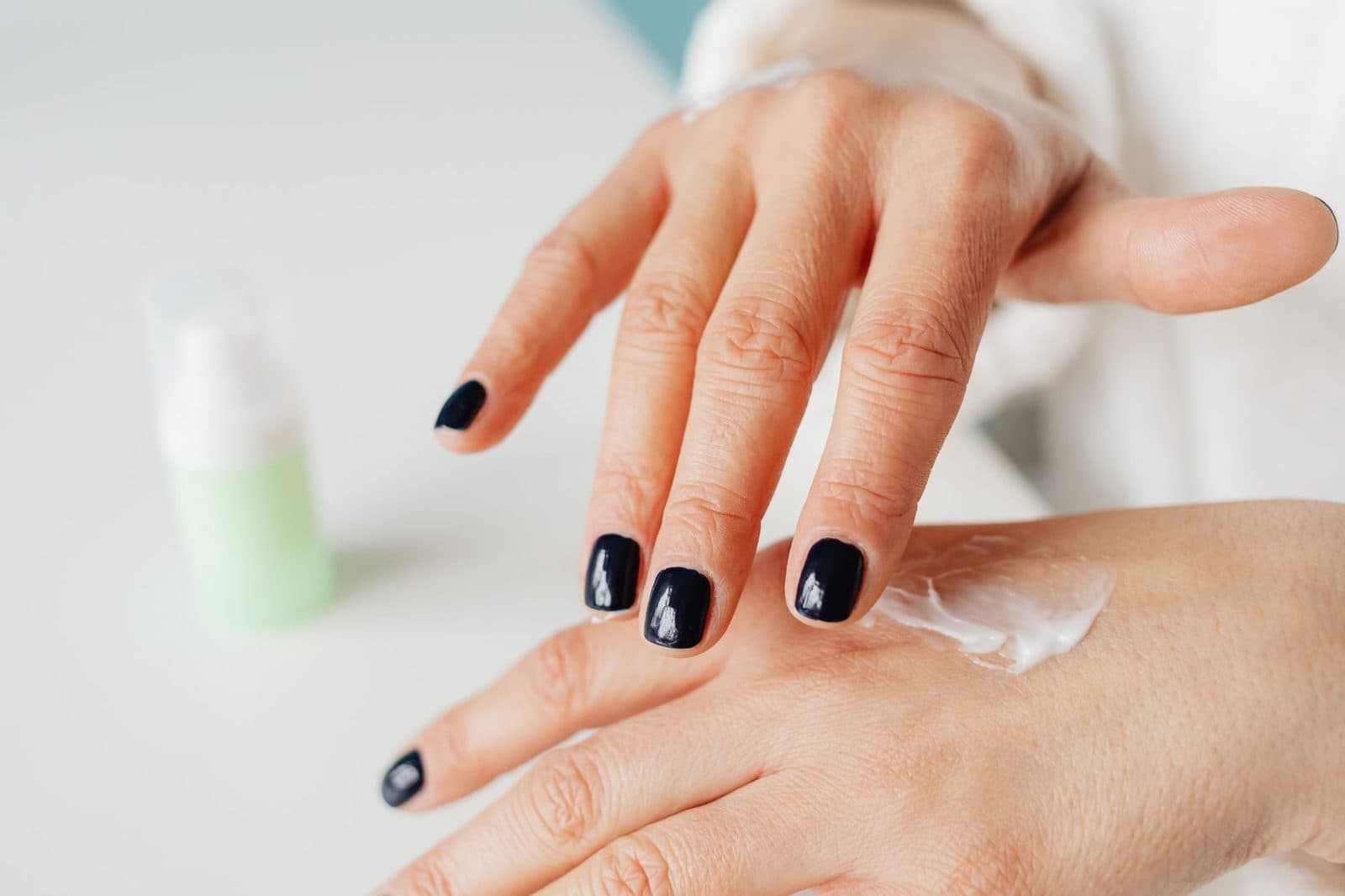
Patch-testing helps before you begin. Apply the product to a small test spot twice a day for seven to ten days and watch for itching or a rash. It won't predict a purge, but it can catch an allergy before it reaches your whole face.
If you haven't started yet, how to start retinol without irritation sets out a gentler schedule. A simple routine around the active matters as much as the active.
When should you stop using the product?
Stop straight away if you get an itchy rash, swelling, blistering or weeping skin. DermNet describes allergic contact dermatitis as usually appearing 24 to 72 hours after contact and settling over several days once the product is removed. A purge does not itch like that.
Stop, or at least pause, if your skin burns or stings a lot each time you apply it. Let it recover with a bland cleanser and moisturiser, then restart less often if you want to try again.
Stop if the product has no retinoid or acid in it and you now have lots of small, similar bumps. Removing a pore-clogging product is the fix, and waiting will not help.

And stop, or get advice, if you are past 6 to 8 weeks of steady use with no sign of improvement. The product may be fine and simply not enough for your skin.
Retinoids should not be used during pregnancy. If you are pregnant, breastfeeding or trying to conceive, check with your doctor before using a retinoid or a high-strength salicylic acid product.
If your breakouts sit mostly on the lower face and follow your cycle, the product may not be the main story. See why you break out on your chin and jawline.
When to see a dermatologist
See a dermatologist or your GP if:
- You develop an itchy, swollen, blistering or weeping rash after a new product. A dermatologist can arrange patch testing, the standard way to identify a contact allergy.
- New spots are large, deep and painful. These carry a higher risk of scarring and are worth treating early.
- Your skin is still getting worse after 6 to 8 weeks on a product you have used as directed.
- Irritation does not settle after you stop the product.
- You are pregnant or planning to be and want to know which actives are suitable.
- You have tried two or three non-prescription options, each for a fair length of time, without progress. A doctor can offer prescription treatments and can tell you whether what you are seeing is acne at all.
Common questions
Can a moisturiser or sunscreen cause purging?+
Purging is described only for ingredients that speed up skin cell turnover. A plain moisturiser, sunscreen or foundation has no such ingredient, so new spots after starting one are more likely to be clogged pores or irritation.
Does everyone purge when they start a retinoid?+
No. A review of clinical trial data found no evidence that topical retinoids make acne flare. Worsening in the first weeks is listed as possible in patient information for adapalene, so it may happen to some people and not others.
Should I use more of the product to get through a purge faster?+
No. More product means more irritation, and irritated skin is more likely to break out. A pea-sized amount on alternate nights for the first two to four weeks is the approach used in dermatology guidance.
Can I use retinoids while pregnant?+
Retinoids are not recommended during pregnancy. If you are pregnant, breastfeeding or trying to conceive, check with your doctor before starting or continuing one.
Sources
- Facial Acids: Know What You Need in Your Skin Care Routine
- Do Topical Retinoids Cause Acne to "Flare"?
- Why Topical Retinoids Are Mainstay of Therapy for Acne
- Adapalene: MedlinePlus Drug Information
- 10 skin care habits that can worsen acne
- I have acne! Is it okay to wear makeup?
- Allergic Contact Dermatitis: Symptoms, Causes, and Treatment
- Retinoid or retinol?
- How to test skin care products
This guide is general information about skincare, not medical advice, and it cannot diagnose a skin condition. See a dermatologist or your doctor about anything that worries you.