A Simple Skincare Routine for Beginners, Morning and Night
By the DermaVault Editorial Team ·
A beginner routine needs three products: a gentle cleanser, a moisturiser and a broad-spectrum sunscreen of SPF 30 or higher. In the morning, cleanse, moisturise, then apply sunscreen last. At night, cleanse and moisturise. Add anything else later, one product at a time.

A beginner routine needs three products: a gentle cleanser, a moisturiser and a broad-spectrum sunscreen of SPF 30 or higher. In the morning you cleanse, moisturise and finish with sunscreen. At night you cleanse and moisturise.
That is the whole routine. Serums, toners, eye creams and exfoliants are optional, and they work better added later, one at a time, once these basics are a habit.
What should a morning routine look like?
Three steps, in this order.
- Cleanse. Wet your face with lukewarm water and apply a gentle, non-abrasive cleanser with your fingertips. Rinse, then pat dry with a soft towel.
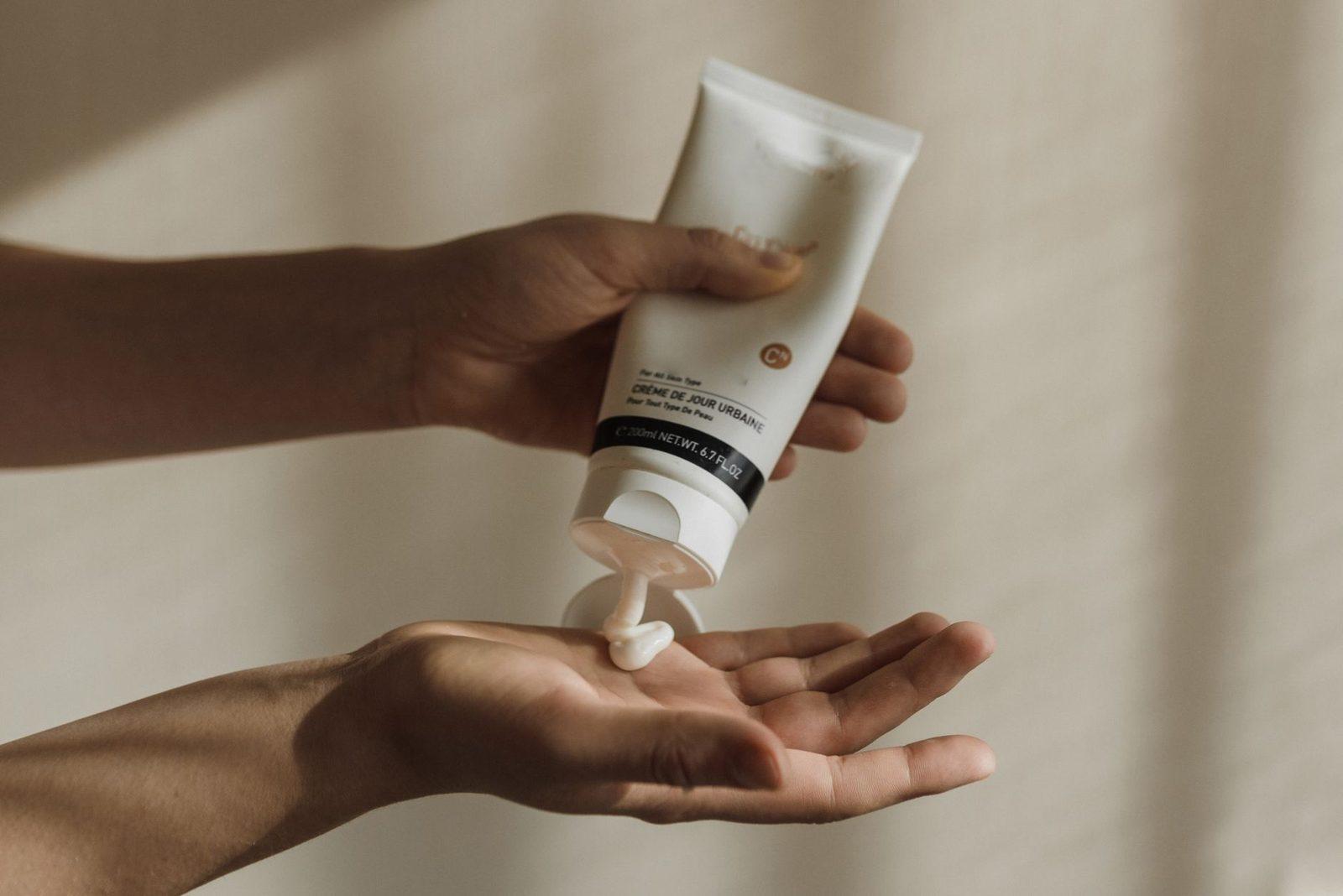
- Moisturise. Apply moisturiser while your skin is still slightly damp.
- Sunscreen. Apply it last, after your other skincare and before any makeup.
The American Academy of Dermatology (AAD) advises against washcloths, sponges and scrubbing, because all of them can irritate the skin. It also suggests avoiding cleansers that contain alcohol.

For sunscreen, the AAD recommends a product that is broad-spectrum (meaning it covers both UVA and UVB rays), SPF 30 or higher, and water-resistant. The amount matters as much as the number on the bottle. A face needs at least a teaspoon, which is about what it takes to cover the length of your index and middle fingers.
Put it on about 15 minutes before you go outside, and reapply every two hours while you are outdoors. If you want the reasoning behind daily use, it is covered in do you really need sunscreen every day.
What should a night routine look like?
Two steps.
- Cleanse. If you wear makeup, take it off first. The AAD lists going to bed in makeup as a habit that can lead to breakouts and premature ageing. Cleveland Clinic suggests avoiding fragranced makeup wipes.
- Moisturise. The same moisturiser you use in the morning is fine.
There is no sunscreen at night, so the evening is where an extra product would eventually go. Leave that slot empty for now.
The AAD's guidance is to limit washing to twice a day, plus once more after heavy sweating, because sweat left on the skin can irritate it.
Which cleanser and moisturiser should you buy?
Buy for your skin type, and ignore the price. Cleveland Clinic's dermatologists say the products that help your skin are not always the most expensive ones. If you are unsure of your type, how to find your skin type at home explains a simple way to check.
Moisturisers differ mainly in thickness. The AAD describes four kinds, and the right one depends on how your skin behaves.
| Your skin | What the AAD suggests |
|---|---|
| Oily | A light, water-based gel, or skipping moisturiser if your skin doesn't need it |
| Normal | A lotion |
| Dry | A cream or ointment, which hold more water in the skin than a lotion |
| Combination | Treat your face as two zones: moisturise the dry areas and skip the oily T-zone |
Two ingredients are worth looking for on the label. Ceramides are waxy fats that help skin stay hydrated. Hyaluronic acid is a strongly moisturising ingredient found in many gels and creams.
If your skin is dry, the AAD suggests avoiding moisturisers that contain alcohol or fragrance. Whatever your type, "non-comedogenic" on the label means the product is formulated not to clog pores.
If your skin often feels tight or flaky, the difference between skin that lacks oil and skin that lacks water is explained in dry skin vs dehydrated skin.
Does the order of products matter?
Yes, though with three products it is hard to get wrong. The rule from Cleveland Clinic's dermatologists is to apply products from thinnest to thickest. A thin product put on over a thick cream will not get through to the skin as well.
When you do add more products, the order looks like this.
- Morning: cleanser, serum (if you use one), moisturiser, sunscreen.
- Night: cleanser, retinoid (if you use one), moisturiser.
A scan can help you decide what, if anything, to add. DermaVault is a cosmetic skincare app that estimates scores such as hydration and barrier from a guided photo of your face, which gives you a starting point for choosing. The scores are estimates, and the three basics stay the same whatever they say.
When should you add a serum or retinol?
Give the basic routine at least a month first. The AAD's advice is to keep a routine consistent for at least 30 days before judging whether it is working.
Then choose one concern and one product. Cleveland Clinic's guidance is to keep the number of new products small, introduce them one at a time, and use only one serum at once. If two new products go on in the same week and your skin reacts, you won't know which one caused it.
The two additions with the most support from the AAD are these.
- Vitamin C in the morning. This is an antioxidant serum or cream, applied after cleansing and before sunscreen. The AAD lists it for dark spots and signs of skin ageing.
- A retinoid at night. Retinoids are vitamin A ingredients, and retinol is the common over-the-counter form. The AAD lists them for fine lines, uneven tone, texture and acne.
Retinoids can cause dryness, redness and irritation at first. The AAD suggests starting with the mildest formula you can find and using it every other night. Cleveland Clinic suggests a pea-sized amount for the whole face. A slower schedule is set out in how to start retinol without irritation.
Retinoids should not be used during pregnancy, according to the AAD. If you are pregnant, planning to be, or breastfeeding, check with your doctor before using one.
Exfoliating acids such as glycolic acid can wait. If you add one later, Cleveland Clinic suggests a couple of times a week, and the AAD warns that overusing exfoliators can damage the skin's barrier and leave it reacting to products it used to tolerate. How often to exfoliate your face has the detail.
How to patch-test a new product
The AAD's method is specific, and it is worth following for anything with an active ingredient.
- Apply the product to a coin-sized patch of skin on the underside of your arm or the bend of your elbow.
- Use the same amount you would use on your face, twice a day, for seven to ten days.
- For a product you rinse off, such as a cleanser, leave it on for five minutes or as long as the instructions say.
- If there is no redness, itching or swelling by the end, start using it on your face.

If your skin does react, wash the product off gently and stop using it.
What mistakes do beginners make?
Most of them come from doing too much.
Scrubbing comes first. The AAD is clear that scrubbing irritates skin and can make conditions such as acne worse. That covers rough cloths and abrasive cleansers as well as scrubbing with your hands.
Starting several products in the same week is the next. Cleveland Clinic's advice is to start slowly and avoid heavily fragranced products.
Using too little sunscreen is easy to do. The AAD's guide amount for a face is at least a teaspoon, so measure out the two finger lengths until the amount becomes automatic.
Giving up after a fortnight is too soon. Thirty days is the AAD's minimum for judging a routine.
Then there is following a routine built for someone else. The AAD's advice for people in their 20s is to tailor a routine to your own skin and to be cautious about trends on social media.
When to see a dermatologist
A basic routine is for looking after skin that is broadly well. Book an appointment with a dermatologist, or your GP, if any of these apply.
- Your skin reacts to a product with redness, itching or swelling that does not settle after you stop using it.
- You keep reacting to products and cannot work out which ingredient is responsible. A dermatologist can arrange formal patch testing.
- Breakouts, redness, flaking or itching are affecting your daily life. These can be signs of conditions such as acne, rosacea or eczema, which a dermatologist can confirm and treat.
- You notice a spot or mole that looks different from the others, or one that changes, itches or bleeds.
Common questions
Do I need a toner?+
No. A toner is optional, and Cleveland Clinic's dermatology guidance does not treat it as an essential step. If you like using one, avoid alcohol-based toners, which can strip the skin's natural oils.
Do I need a separate eye cream?+
Not as a beginner. Your ordinary face moisturiser can be used around the eyes, applied gently so you don't pull the skin. An eye cream is something to consider later if you want one.
Should I wash my face in the morning if I washed it the night before?+
The American Academy of Dermatology suggests washing when you wake, before bed and after sweating. A gentle cleanser with lukewarm water is enough, and you should not need to scrub.
Are expensive skincare products better?+
No. Cleveland Clinic's dermatologists say the products that help your skin are not always the most expensive ones, and a high price does not mean a product will work.
Do I need moisturiser if my skin is oily?+
It depends how your skin feels. The American Academy of Dermatology says people with oily skin can use a light gel moisturiser or skip it, and should look for products labelled non-comedogenic.
Sources
- Face washing 101
- How to pick the right moisturizer for your skin
- How to apply sunscreen
- How to test skin care products
- Dermatologist-recommended skin care for your 20s
- 10 skin care secrets for healthier-looking skin
- How To Order Your Skin Care Routine
- Easy Steps for a Simple Skin Care Routine
- Retinoid or retinol?
- Retinol: Cream, Serum, What It Is, Benefits, How To Use
This guide is general information about skincare, not medical advice, and it cannot diagnose a skin condition. See a dermatologist or your doctor about anything that worries you.