How to Repair a Damaged Skin Barrier
By the DermaVault Editorial Team ·
Stop whatever is stripping your skin, then keep your routine plain: a mild, fragrance-free cleanser with lukewarm water, a cream or ointment on damp skin, and sunscreen every morning. Pause exfoliants, retinoids and scrubs until the stinging and flaking settle. Cleveland Clinic says it typically takes three or four months to start seeing the benefit.
Stop whatever is stripping your skin, then keep your routine plain. That means a mild, fragrance-free cleanser with lukewarm water, a cream or ointment on damp skin, and sunscreen every morning. Put exfoliants, retinoids and scrubs away until the stinging and flaking settle.
Expect it to be slow. Cleveland Clinic says it typically takes three or four months to start seeing the benefit of gentler habits.
What is the skin barrier?
The barrier is the outermost layer of your skin, called the stratum corneum. DermNet describes it as dead, dried-out cells called corneocytes, arranged like bricks and mortar.
The cells are the bricks. The mortar is a mix of natural fats (lipids) that fills the gaps between them. Cleveland Clinic names the main ones as ceramides, cholesterol and fatty acids.
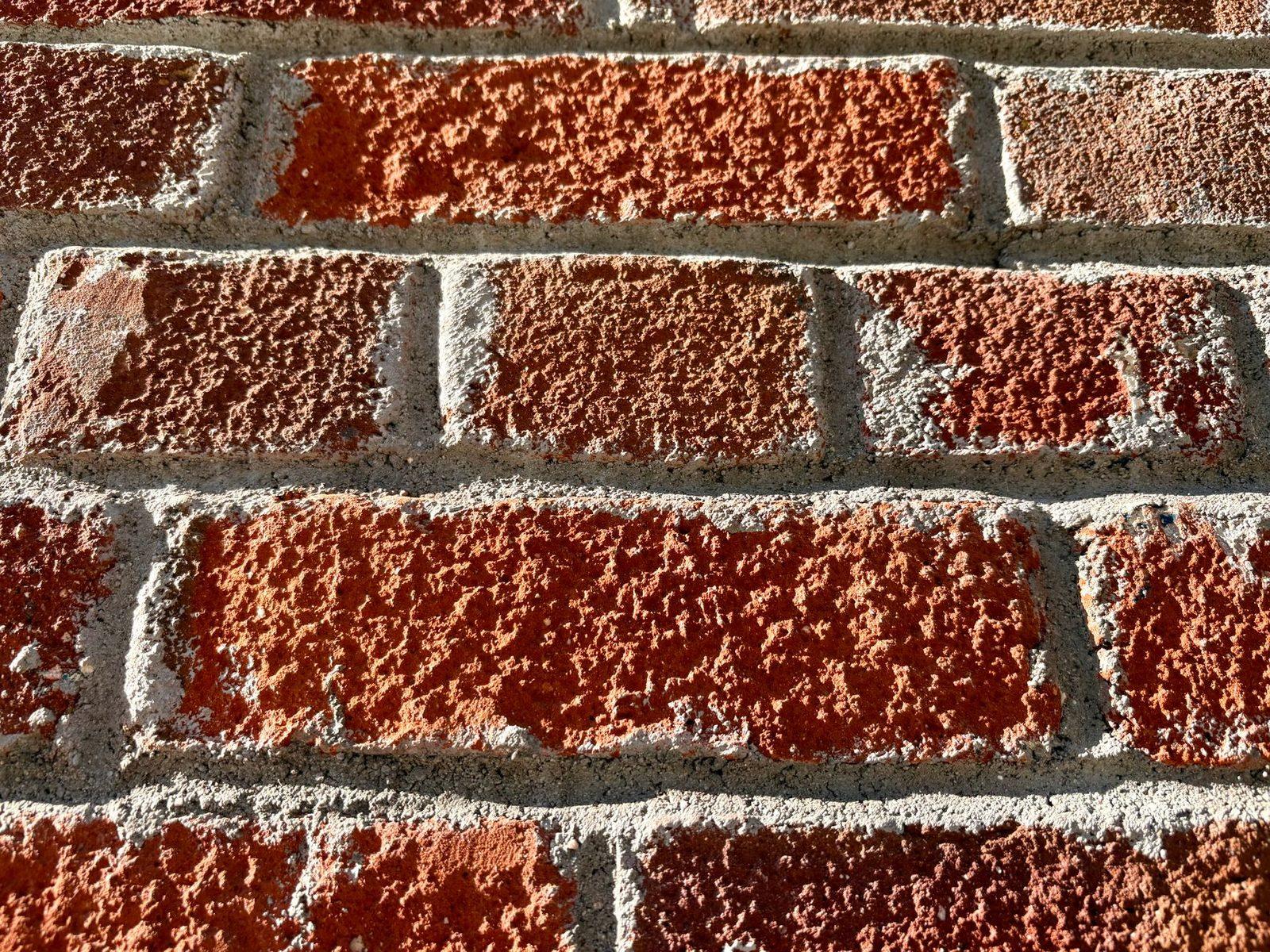
This wall does two jobs. DermNet puts it as an inside-outside barrier that regulates water loss, and an outside-inside barrier that protects against mechanical, chemical and microbial harm.
Acidity matters as well. DermNet gives the normal pH of the skin surface as 4.5 to 5.5 (Cleveland Clinic says about 5.5), and explains that the enzymes which produce ceramides and free fatty acids work best in that acidic range.
When the mortar is thinned out, water escapes more easily and irritants get in more easily. A review of moisturisers published in the Indian Journal of Dermatology describes the loss of those lipids as the thing that damages the skin's water barrier and leads to dryness.
How do you know your barrier is damaged?
There is no home test. You go by how your skin looks and feels. Cleveland Clinic lists these signs:
- dry, scaly or flaky skin
- rough patches
- itchiness
- stinging, especially when you apply skincare products
- tenderness or sensitivity
- inflammation and irritation
These signs overlap with other things. Dryness on its own may be a lack of oil or a lack of water, which dry skin vs dehydrated skin explains.
Cleveland Clinic also points out that a poor barrier is associated with conditions such as eczema, rosacea, psoriasis and adult acne. If your skin has been like this for a long time, with no obvious trigger, that is a reason to ask a dermatologist instead of adjusting products.
What damages it?
According to Cleveland Clinic, the everyday causes are harsh chemicals or soaps, over-exfoliating or scrubbing, and not using a moisturiser.
The details are worth knowing, because most of them feel like good skincare while you are doing them.
- Hot water. Cleveland Clinic compares the barrier to butter on a knife: hold it under hot water and it melts away. Hot water washes off the skin's natural oils in the same way.
- Soap. It strips natural oils along with the dirt.
- Long cleansing. Massaging cleanser in for a full minute brings no benefit, and Cleveland Clinic says it may begin to break down the fatty layer of the barrier.
- Scrubs with gritty particles. Cleveland Clinic says these create tiny tears in the barrier.
- Retinoids. The British Cosmetic Dermatology Group lists redness, irritation, dryness and flaking as common effects, especially at the start, and the American Academy of Dermatology (AAD) names retinoids among the products to stop when skin is dry.
If you suspect exfoliation is the cause, how often should you exfoliate your face covers a safer schedule for later.
How do you repair it, step by step?
The method is to remove the causes and then protect the skin while it replaces its own lipids. Nothing here is complicated. Doing less is the hard part.
- Stop the actives. Put away exfoliating acids, scrubs, cleansing brushes and retinoids. The AAD's stop list for dry skin is products that contain alcohol, fragrance or retinoids.
- Wash gently. The AAD advises a gentle, non-abrasive cleanser without alcohol, applied with your fingertips and rinsed with lukewarm water. A washcloth or sponge can irritate. Cleveland Clinic suggests a soap-free, fragrance-free cleanser made for sensitive skin.
- Wash less. The AAD's limit is twice a day, plus after heavy sweating. Massage the cleanser on and rinse it off.
- Pat dry with a soft towel. Rubbing irritates very dry skin.
- Moisturise while your skin is still damp. The AAD recommends this, and DermNet explains why: moisturisers work best straight after washing, because the water that has entered the outer skin stays there.
- Reapply during the day if your skin feels tight. DermNet says the effect of a moisturiser is greatest in the first 6 hours, and that applying it 2 to 3 times a day may be needed.
- Wear sunscreen every morning. The AAD recommends broad-spectrum, water-resistant SPF 30 or higher, along with shade and protective clothing.
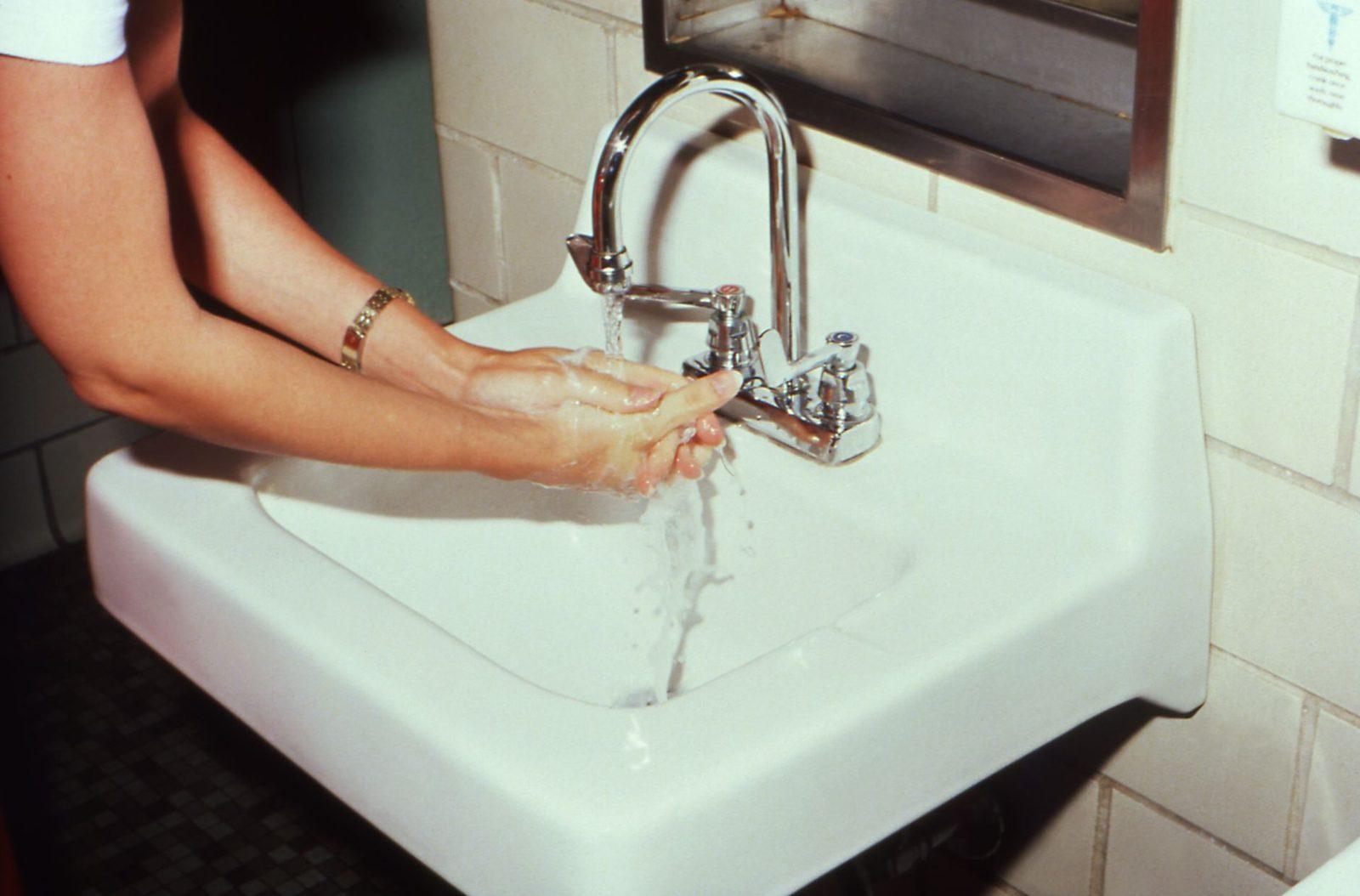
The same rules apply in the shower. The AAD suggests limiting showers and baths to five to ten minutes in warm water. If the air at home is dry, it also suggests running a humidifier in the bedroom while you sleep.
If you have spots, resist treating them hard while your skin is raw. Cleveland Clinic's advice is to back down on acne treatments for a while and let the skin settle first.
How long does it take?
Cleveland Clinic's estimate is three or four months before you start to see the benefit. Its reasoning is simple: the damage built up over a long time, and products and habits need time to work.
Age changes the pace. Cleveland Clinic says the barrier does not replace itself as well or as quickly as you get older, particularly once you are in your 50s, 60s or 70s.
None of the sources used here names a product that shortens this. What they describe is steady, gentle care, kept up for months.
Slow change is hard to judge in the mirror. A photo in the same light every couple of weeks helps. So does DermaVault, a cosmetic skincare app whose scans give estimated scores for barrier, hydration and calmness, which lets you compare one month with the next.
Which moisturiser ingredients help?
Texture comes first. The AAD says ointments and creams add more moisture and are more effective than lotions. DermNet ranks ointments as the most occlusive, then creams, then lotions.
After that, look at the ingredient list. Moisturisers are built from three kinds of ingredient, and DermNet and the Indian Journal of Dermatology review describe them in similar terms.
| Type | What it does | Examples |
|---|---|---|
| Humectant | Attracts water and holds it in the outer skin | Glycerine (glycerin), urea |
| Occlusive | Forms an oily layer that reduces water loss | Petroleum jelly, mineral oil, dimethicone |
| Emollient | Oily substances that soften and smooth by filling cracks in the outer layer | Lanolin, glyceryl stearate, ceramides |
A humectant on its own has a drawback. The review explains that humectants pull water up from the deeper skin, where it can then evaporate, which is why they are usually combined with an occlusive.
Cleveland Clinic's advice is to look for ceramides, fatty acids and lipids, because these are what the barrier is naturally made of. The AAD's list for dry skin includes glycerin, hyaluronic acid, petrolatum, dimethicone, mineral oil, lanolin, shea butter and jojoba oil.
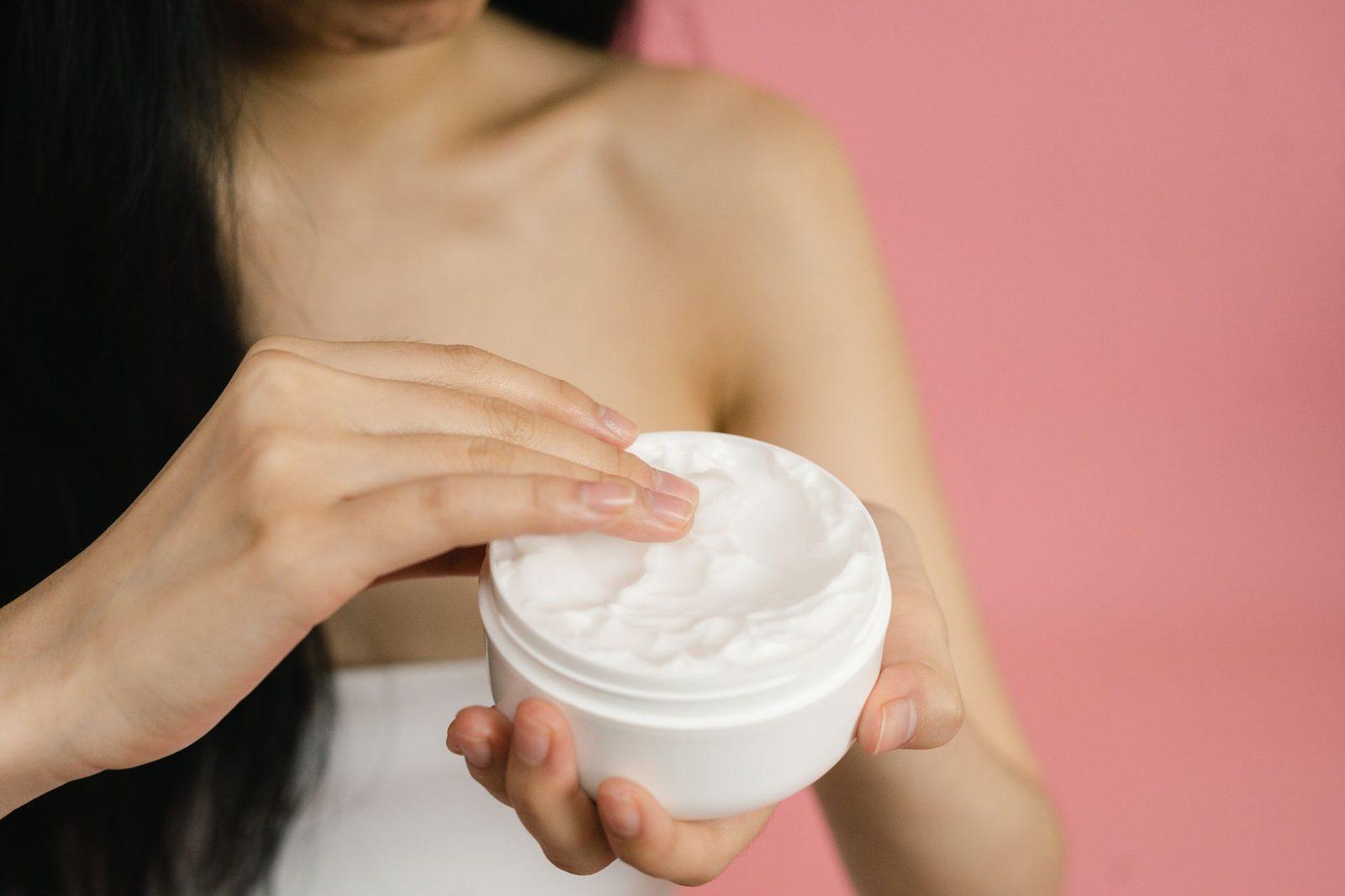
Choose fragrance-free. The AAD makes a useful distinction here: a product labelled "unscented" can still contain chemicals that mask the smell of other ingredients, and those can irritate dry, sensitive skin.
Two cautions. DermNet notes that urea and other acidic preparations often sting on scratched or cracked skin, so leave those until later. It also warns that heavy occlusive products can cause or aggravate acne, so if you break out easily, a cream is a safer choice than a thick ointment on your whole face.
When can you bring actives back?
Wait until your skin has been comfortable for a while: no stinging when you apply moisturiser, no flaking, no tightness after washing. The sources here do not give a number of weeks for this, so let your skin set the date.
Then add one product at a time.
Patch-test it first. The AAD's method is to apply the product to a coin-sized spot on the underside of your arm or the bend of your elbow, twice daily for seven to 10 days. If you get red, itchy or swollen skin, do not use it on your face.
Start with a low frequency and build up. The British Cosmetic Dermatology Group advises keeping other potentially irritating products, such as hydroxy acids, out of your routine while skin adjusts to a retinoid, and reintroducing them cautiously. There is a week-by-week schedule in how to start retinol without irritation.
Retinoids, including over-the-counter retinol, are not recommended during pregnancy or breastfeeding. The British Cosmetic Dermatology Group says they must not be used at those times, so check with your doctor about alternatives.
Keep the gentle cleanser, the moisturiser and the sunscreen as the permanent base, whatever else you add. A simple skincare routine for beginners sets that base out for morning and night.
When to see a dermatologist
The AAD's advice is direct: if your skin is still dry after you have followed the steps above, see a board-certified dermatologist. Ongoing dryness can be a sign of an underlying condition such as atopic dermatitis (eczema) or psoriasis, which a dermatologist can confirm.
Book an appointment as well if:
- everything you apply, including plain moisturiser, causes burning, stinging or irritation
- your skin is cracked, bleeding, weeping or crusted
- redness and soreness are spreading or getting worse despite a gentle routine
- you have a rash that appeared after a new product, which can be a sign of contact dermatitis
- irritation keeps returning every time you stop the gentle routine
Tell the dermatologist which products you were using when the problem began, and bring them if you can. A dermatologist can recommend a moisturiser suited to your skin and may prescribe a short course of treatment, such as a corticosteroid, where it is needed.
Common questions
Can a damaged skin barrier repair itself?+
Yes, the barrier replaces itself, and your job is mostly to stop interrupting it. Cleveland Clinic notes that this replacement slows with age, so skin in your 50s, 60s or 70s recovers less quickly than younger skin.
Should I stop using retinol if my skin barrier is damaged?+
Pausing is sensible. The American Academy of Dermatology lists retinoids among the products to stop when skin is dry, and you can bring retinol back slowly once your skin is comfortable again.
Is petroleum jelly good for a damaged skin barrier?+
It can help. DermNet lists petroleum jelly as an occlusive, an ingredient that forms a protective layer and reduces water loss from the skin. DermNet also warns that occlusive products can cause or aggravate acne, so use it sparingly if you break out easily.
Do I still need sunscreen while my skin is irritated?+
Yes. The American Academy of Dermatology recommends a broad-spectrum, water-resistant sunscreen of SPF 30 or higher for dry skin. If yours stings, try a fragrance-free one made for sensitive skin.
Sources
- How To Tell if Your Skin Barrier Is Damaged and What To Do About It
- Skin barrier function
- Dermatologists' top tips for relieving dry skin
- Face washing 101
- Emollients and Moisturizers (Moisturisers)
- Moisturizers: The Slippery Road
- How to test skin care products
- Topical Retinoids - British Cosmetic Dermatology Group
This guide is general information about skincare, not medical advice, and it cannot diagnose a skin condition. See a dermatologist or your doctor about anything that worries you.