Blackheads vs Sebaceous Filaments: How to Tell the Difference
By the DermaVault Editorial Team ·
Sebaceous filaments are a normal part of every pore. They look like small, flat, grey or yellowish dots spread evenly over the nose, and they refill within 30 days if you squeeze them. A blackhead is a blocked pore, a form of acne: a darker plug, often in a slightly raised bump, that appears singly. Salicylic acid and retinoids can make both less visible.

If your nose is covered in small, evenly spaced, greyish dots, you are almost certainly looking at sebaceous filaments. They are a normal part of how pores work, and every person has them.
Blackheads are different. A blackhead is a pore blocked by a plug of oil and dead skin, which makes it a form of acne. It is usually darker, sits in a slightly raised bump, and turns up singly.
The distinction matters because you can clear a blackhead. A sebaceous filament will always come back.
What are sebaceous filaments?
Each pore on your face is the opening of a hair follicle with an oil gland attached. Cleveland Clinic describes sebaceous filaments as thin, threadlike structures lining those glands. Their job is to help move sebum, the skin's natural oil, up to the surface.
A dermatology journal report describes what you actually see: yellowish to off-white collections of sebum and dead cells around hair follicles, usually found in normal, healthy individuals, mostly on the nose.
They are not a blockage. Oil travels freely past them to the surface, which keeps skin lubricated.
They show up most on the nose, forehead, chin and cheeks. Under a magnifying mirror they can look alarming. At normal distance they look like visible pores, because that is what they are.

What is a blackhead?
A blackhead forms when a pore becomes clogged with excess oil and dead skin cells. The American Academy of Dermatology (AAD) explains that if the clogged pore closes over you get a whitehead, and if it stays open you get a blackhead. The medical name is an open comedone.
The key difference is the plug. Cleveland Clinic notes that in a blackhead a plug of sebum sits at the surface and stops oil travelling through the pore.
The dark colour is widely misunderstood. DermNet states that blackheads are black because of surface pigment (melanin, the same pigment that colours skin), and that dirt plays no part. The AAD says the same thing in fewer words: the black dots aren't dirt, so resist scrubbing.
How can you tell them apart?
Look in ordinary daylight with a normal mirror, held at arm's length first. Then compare what you see with this.
| Sebaceous filaments | Blackheads | |
|---|---|---|
| Colour | Grey, light brown or yellowish | Dark, close to black |
| Shape | Small and flat | A dark speck, often in a slight bump |
| Pattern | Even and regular, pore after pore | Individual and scattered |
| Where | Nose most of all, also chin, forehead and cheeks | Anywhere acne appears, often forehead and chin |
| What it is | A normal part of the pore | A blocked pore, a form of acne |
| If squeezed | Refills within 30 days | Risk of inflammation, infection and scarring |
| Can it be cleared | No, only made less visible | Yes, with consistent care |
Pattern is a useful rule of thumb, though it is not something the sources spell out. Many near-identical dots spread evenly across the nose are more likely filaments. One or two darker spots that stand out from their neighbours are more likely blackheads.
You can have both at once.
A scan can help you see the spread without a magnifying mirror. DermaVault, a cosmetic skincare app, maps blackheads and shine by face zone and gives a texture score. These are estimates from a photo, so use them to track whether an area is changing over the weeks, and use the table above to judge what the dots are.
Should you squeeze them?
No, for either one.
With sebaceous filaments it is simply pointless. Cleveland Clinic states that if you squeeze out the sebum, your pores fill up again within 30 days. It also points out that your nails are much stronger than your skin, so you risk damage for a result that doesn't last.
With blackheads the stakes are higher. DermNet lists squeezing among the things that make comedones worse, because injury can rupture the follicle. The AAD warns that home popping often pushes some of the contents deeper into the skin, which increases inflammation, and that it can lead to infection and permanent scars.
Squeezing also works against the reason you started. The AAD notes that picking at or digging into your pores irritates the skin and makes pores look more noticeable.
What helps reduce them?
The same short list of ingredients suits both. What differs is the result you should expect: blackheads can clear, while filaments only become less visible and will need ongoing upkeep.
- Cleanse twice a day, gently. The AAD says cleansing twice daily can unclog pores and reduce oiliness. Use fingertips and lukewarm water.
- Add salicylic acid. It is a beta hydroxy acid (BHA), which means it is oil-soluble and can work down into the pore where sebum sits. Cleveland Clinic recommends it for blackheads and whiteheads. A cleanser or a leave-on product both count. Start a few times a week and build up.
- Consider a retinoid at night. For blackheads, the AAD recommends a retinoid (a vitamin A derivative that helps stop pores clogging), alongside a benzoyl peroxide wash. Retinoids are also on Cleveland Clinic's list for making filaments less noticeable. Go slowly. How to start retinol without irritation covers the method.
- Check your products. Choose makeup, sunscreen and moisturiser labelled non-comedogenic, meaning formulated not to clog pores. DermNet names oily pomades and certain cosmetics as things that aggravate comedones.
- Moisturise and wear sunscreen. Retinoids can make skin more sensitive to the sun, and Cleveland Clinic calls daily sunscreen vital when you use facial acids. The AAD advises a broad-spectrum sunscreen of SPF 30 or higher.
- Give it 6 to 8 weeks. That is the AAD's time frame for blackhead treatment. DermNet is more cautious and says several weeks to months before worthwhile improvement.
Patch-test any new active on a small test spot twice a day for seven to ten days before using it across your face. Introduce one at a time, so that if your skin reacts you know which product did it.
Some people notice more spots in the first weeks of a retinoid or acid. Skin purging vs breaking out explains what is expected and what isn't.
If you are pregnant or breastfeeding, retinoids are not recommended, and you should check with your doctor before using high-strength salicylic acid.

What doesn't work?
Hard scrubbing does nothing useful here. The dark tip of a blackhead is pigment in a plug below the surface, and a filament is part of the pore's lining. Neither can be scrubbed away, and both the AAD and DermNet warn that abrasive washing irritates skin and can make comedones worse.
The sources differ a little on gentle scrubs. Cleveland Clinic lists an exfoliating facial scrub, massaged in for up to 30 seconds, among the ways to make filaments less noticeable. If you try one, keep it light and occasional. How often you should exfoliate explains where the limit is.
Trying to remove filaments permanently is not possible. They are how oil reaches your skin, and they refill by design.
Shrinking pores for good is in the same category. The AAD's wording is careful: you can make pores less noticeable. Keeping them clear stops them stretching, and that is the realistic goal. How to minimise large pores goes through what is achievable.
Heavy, rich creams used to "balance" oily skin can backfire. DermNet lists overhydration from moisturisers among the factors that aggravate comedones. A light, non-comedogenic moisturiser is enough. If you are unsure how oily your skin really is, find your skin type first.
Pore strips are the product people ask about most. Cleveland Clinic says they can pull out sebaceous filaments as well as blackheads, and that removing filaments can dry out your skin and let in bacteria that cause acne. Its advice is to be careful with them. Since pores refill within 30 days, any result is temporary.
When to see a dermatologist
See a dermatologist if:
- You have used a retinoid or salicylic acid consistently for 6 to 8 weeks and your blackheads haven't improved. A dermatologist can offer prescription-strength treatment.
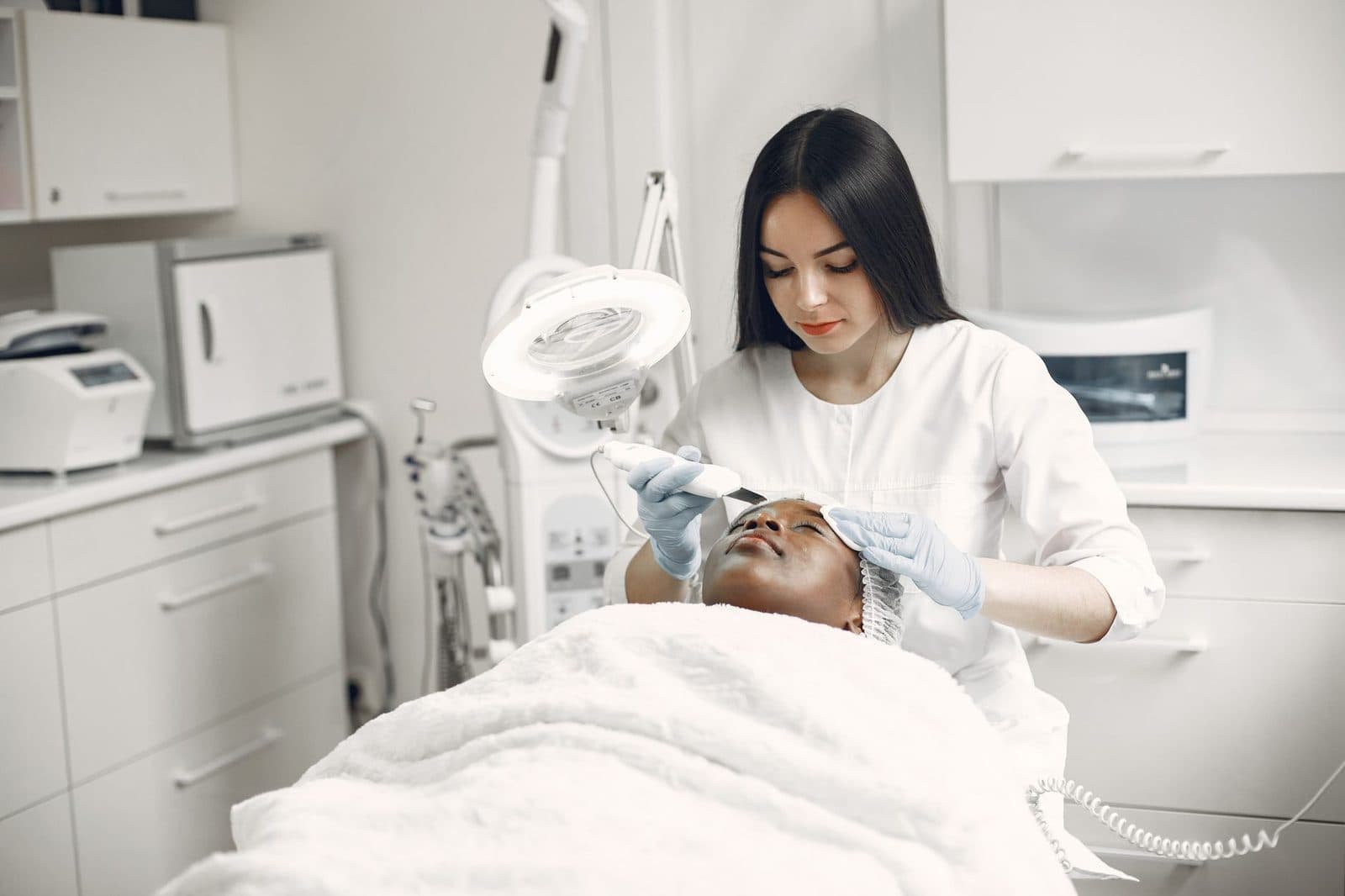
- You want blackheads removed. Dermatologists perform acne extraction with sterile instruments, which avoids the scarring and infection risk of doing it yourself.
- Your blackheads are joined by red, pus-filled or deep, painful spots. Deep spots can scar, and early treatment limits that.
- You have squeezed an area and it is now sore, swollen or leaving a mark.
- The dots are unusually prominent or widespread, or you are not sure what they are. Several things can look like sebaceous filaments, and a dermatologist can tell them apart with a close examination.
- Over-the-counter products are not making your pores or filaments any less visible and it bothers you.
Common questions
Do pore strips remove sebaceous filaments?+
They can. Cleveland Clinic says pore strips may remove sebaceous filaments along with blackheads, which can dry out your skin and let in acne-causing bacteria, so it advises care. Pores refill within 30 days, so the effect does not last.
Can sebaceous filaments turn into blackheads?+
They are different things. A filament lets oil flow freely to the surface, while a blackhead is a pore blocked by a plug. Keeping pores clear with a salicylic acid product or a retinoid helps with both, but the sources don't describe one becoming the other.
Why are my sebaceous filaments so visible?+
Everyone has them, and they show most on the face, especially the nose. A magnifying mirror also makes them look far bigger than anyone else sees them.
Is salicylic acid safe to use every day?+
Cleveland Clinic says most people can use salicylic acid up to twice a day, and the American Academy of Dermatology notes some salicylic acid cleansers are gentle enough for daily use. Start less often and cut back if your skin feels dry or tight.
Sources
- Sebaceous Filaments: Difference From Blackheads & Treatment
- Sebaceous Filaments
- Comedonal acne
- How to treat different types of acne
- What can treat large facial pores?
- Pimple popping: Why only a dermatologist should do it
- Facial Acids: Know What You Need in Your Skin Care Routine
- Retinoid or retinol?
- How to test skin care products
This guide is general information about skincare, not medical advice, and it cannot diagnose a skin condition. See a dermatologist or your doctor about anything that worries you.