What Does Niacinamide Do for Your Skin?
By the DermaVault Editorial Team ·
Niacinamide is a form of vitamin B3 that helps your skin hold on to water, reduces oil and shine, and can fade dark spots and calm redness. Most of the evidence is for products at 2% to 5%, used once or twice a day, and changes take roughly 4 to 12 weeks depending on what you are using it for.
Niacinamide is a form of vitamin B3 that does several modest, useful things at once. It helps your skin hold on to water, reduces oil and shine, and can fade dark spots and calm redness. It is also one of the gentler active ingredients, which is why it turns up in so many serums and moisturisers.
It works slowly. Depending on what you want from it, expect somewhere between 4 and 12 weeks of daily use before you can judge it.
What is niacinamide?
Niacinamide is the name used on skincare labels. Doctors and DermNet, the dermatology reference site, call it nicotinamide. Both names mean the same thing: the water-soluble, active form of vitamin B3.
It is related to niacin, another form of B3, but the two are not interchangeable. Niacin is known for causing flushing. DermNet notes that niacinamide does not.
Most of what follows is about niacinamide applied to the skin. Tablets are a separate subject and one for your doctor.
What does niacinamide do for your skin?
Here is what the evidence supports, with the strengths and time frames from the studies where they were reported.
| Concern | What niacinamide can do | Strength and time in studies |
|---|---|---|
| Dryness, tight skin | Reduces water loss and raises ceramide levels | Not specified |
| Oil and shine | Reduces sebum (skin oil) production | 2%, 4 to 6 weeks |
| Dark spots | Slows the transfer of pigment into skin cells | 5%, from 4 weeks |
| Fine lines, uneven texture | Improves fine lines, pigmentation, texture and blotchiness | 5%, 12 weeks |
| Redness | Eases inflammation | Not specified |
It supports the skin barrier
Your skin barrier is the outer layer that keeps water in and irritants out. DermNet says niacinamide decreases water loss through this layer, which increases hydration, and that it raises production of ceramides, the natural fats that hold the barrier together.
Cleveland Clinic describes the practical result as skin that is more hydrated and less sensitive. If your skin often feels tight, it helps to know whether oil or water is what's missing, which is covered in dry skin vs dehydrated skin.
It reduces oil and shine
This is one of the better-documented effects. DermNet reports that a 2% niacinamide moisturiser applied to the face for 4 to 6 weeks reduces sebum production, with a visible drop in shine.
A peer-reviewed review of niacinamide research found that products with 2% to 5% niacinamide reduced sebum in several clinical studies. In acne studies using 2% to 4%, it worked better in oily skin than in non-oily skin. The same review is frank that nobody yet knows how niacinamide does this.
It can fade dark spots
Dark spots form when pigment made deeper in the skin is passed up into surface cells. Harvard Health explains that niacinamide blocks extra pigment formation by inhibiting that transfer.
In the research Harvard cites, a 5% niacinamide product reduced freckles and sun spots in as little as four weeks. The peer-reviewed review mentioned above adds an important detail: niacinamide's effect on pigment is dose-dependent and reversible. That suggests the benefit fades if you stop, so this is an ingredient you keep in your routine.
Niacinamide is one option among several for uneven tone. How to fade dark spots on your face compares the others.
It can soften fine lines and calm redness
DermNet describes a 12-week study of 5% niacinamide in 50 women that improved fine lines and wrinkles, pigmentation, texture and red blotchiness. It adds that across several clinical studies niacinamide also improved sallowness (a yellowish, tired-looking tone) and elasticity.
Cleveland Clinic says niacinamide has been shown to ease inflammation, which can help calm redness, and that it can soothe irritation caused by strong exfoliants.
Keep expectations in proportion. These are improvements measured in studies, and they are gradual.
What niacinamide won't do
It won't shrink your pores. Cleveland Clinic is direct about this: nothing has been proven to reduce the actual size of pores. Niacinamide may make them look less obvious because skin is less oily and smoother. There are more realistic options in how to minimise large pores.
It won't replace acne treatment. DermNet cites research in which a 4% niacinamide gel performed as well as a 1% clindamycin gel, a prescription antibiotic, for moderate acne. That is encouraging, but persistent or painful spots are still something to take to a doctor.
It won't work overnight. The shortest time frame in the sources is four weeks, and the anti-ageing study ran for twelve.
Knowing which of these concerns is really yours helps you decide whether niacinamide is worth adding. DermaVault, a cosmetic skincare app, estimates scores for things like barrier, clarity and even tone from a guided face scan, and maps shine and dark spots by zone. They are estimates, but they give you a starting point to compare against later.
What percentage of niacinamide should you use?
Somewhere between 2% and 5% is where the evidence sits. Cleveland Clinic notes that most skincare products contain 5% niacinamide or less.
Some serums go higher. The review mentioned above reports tolerance testing that found no irritation at concentrations up to 5% and no stinging up to 10%. None of the sources shows that going above 5% gives better results, so a higher number on the bottle is not a reason to pay more.
If your skin is sensitive, Cleveland Clinic suggests starting with a low concentration.
How do you use it in a routine?
Niacinamide is easy to fit in.
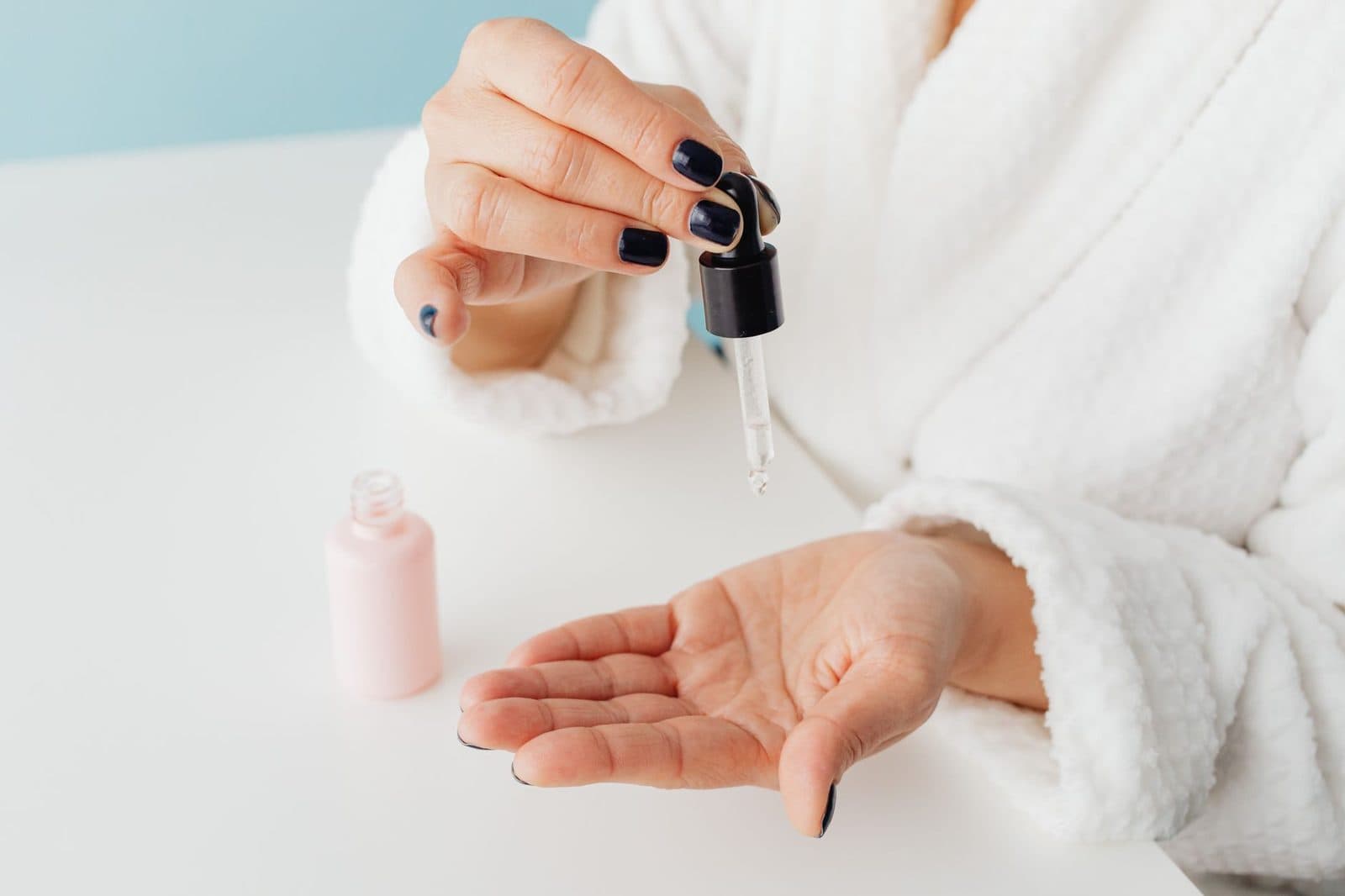
- Patch-test first. The American Academy of Dermatology method is to apply the product to a coin-sized spot on the underside of your arm or the bend of your elbow, twice a day for seven to 10 days. If there is no redness, itching or swelling, use it on your face.
- Apply it once or twice a day after gentle cleansing, as Cleveland Clinic advises.
- Check your product's directions for where it goes relative to moisturiser. Cleveland Clinic suggests applying niacinamide after moisturiser, but formulas differ.
- In the morning, finish with a broad-spectrum sunscreen.
- Give it at least four weeks before deciding whether it is doing anything, and closer to twelve for fine lines.
What can you combine it with?
Cleveland Clinic lists vitamin C, hyaluronic acid, glycolic acid, ceramide moisturisers and retinol as ingredients niacinamide pairs well with.
The retinol pairing is the most useful. Cleveland Clinic says niacinamide may help counteract the irritating side effects of retinol, which fits with what it does for the barrier. If you are planning to begin retinol, read how to start retinol without irritation first. Retinoids are not recommended in pregnancy or while breastfeeding, so check with your doctor before using one.
Add new products one at a time. If something stings, you will know which one to blame. Our free ingredient checker shows how niacinamide sits with the rest of your routine, including niacinamide and vitamin C.
Does niacinamide have side effects?
Rarely. Harvard Health says topical niacinamide appears to be well tolerated, with no serious side effects.
Cleveland Clinic lists the uncommon ones: itching, a mild burning sensation, redness, and allergic reaction. If any of these appear, wash the product off and stop using it. The AAD suggests a cool compress or petroleum jelly to settle the skin.
If a niacinamide product stings, remember that the other ingredients in the formula could be responsible. A different product at a lower strength may suit you better.
When to see a dermatologist
See a dermatologist if a product causes swelling, a spreading rash, or burning that continues after you have washed it off. That can be a sign of an allergic reaction, which a dermatologist can confirm.
Book an appointment as well if:
- dark patches are getting larger or darker despite daily sunscreen
- redness is constant or comes with burning, which can be a sign of a condition such as rosacea
- breakouts are painful, deep or leaving marks
- you have used niacinamide every day for twelve weeks and seen no change in the concern you bought it for
A dermatologist can check what is causing the problem and offer prescription options that are not available over the counter.
Common questions
Is niacinamide the same as niacin?+
They are both forms of vitamin B3, but they behave differently. DermNet notes that niacinamide, unlike niacin, does not cause flushing.
Can I use niacinamide every day?+
Yes. Cleveland Clinic says it can be used once or twice daily after gentle cleansing. Patch-test first if your skin reacts easily.
Can I use niacinamide with vitamin C?+
Cleveland Clinic lists vitamin C among the ingredients niacinamide pairs well with. If you are new to both, add them one at a time so you can tell how your skin responds to each.
Is 10% niacinamide better than 5%?+
There is no good evidence that it is. The studies summarised by DermNet and Harvard Health used 2% to 5%, and a published review found tolerance testing showed no irritation up to 5% and no stinging up to 10%.
Does niacinamide shrink pores?+
No. Cleveland Clinic states that nothing has been proven to reduce the actual size of pores. Niacinamide may make them look less obvious by reducing oil and keeping skin smoother.
Sources
- Nicotinamide
- Top 6 Benefits of Niacinamide
- Mechanistic Insights into the Multiple Functions of Niacinamide: Therapeutic Implications and Cosmeceutical Applications in Functional Skincare Products
- Drugstore skincare: Science-backed anti-aging ingredients that don't break the bank
- How to test skin care products
- Retinol: Cream, Serum, What It Is, Benefits, How To Use
This guide is general information about skincare, not medical advice, and it cannot diagnose a skin condition. See a dermatologist or your doctor about anything that worries you.